|
"THE CATCH"
Nolan Doesken's quarterly CoCoRaHS e-mail message | 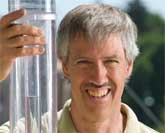 |
COCORAHS –- STORM MEMORIES
Fort Collins, CO —Tuesday, July 30, 2013 Dear rain gauge readers, friends and family: Today we had a great "hail pad party" here in Fort Collins -- nearly 20 of us shared a few pizzas and made over 400 fresh hail pads to keep our regional CoCoRaHS volunteers supplied for the rest of the summer. Thanks to everyone who helped today. Storm Memories As we were constructing hail pads today, we recalled some famous storms that have occurred in this part of the country around this time of year. On July 31, 1976 a flash flood from a foot of rain in the mountains near Estes Park roared down the Big Thompson Canyon and swept about 140 people, many of whom were vacationers, to their graves. This occurred on the eve of Colorado's statehood centennial celebration. The mountains were crowded with travelers thrilled to be in the Rocky Mountains. I know that a surprising number of CoCoRaHS volunteers experienced some aspect of that flood. A few years later on today's date, July 30, 1979, we experienced a catastrophic local hailstorm with many stones 3" to a maximum of 4.5" in diameter. Cars were smashed and some stones went right through roofs and ceilings. The storm occurred just after 5 PM on a workday. Many people were heading home when the storm hit. There were several injuries and even one death (rare but not unprecedented for U.S. hail storms). I happened to be heading to Wyoming that day for my first-ever visit to Yellowstone National Park, so I didn't even know about the storm. A few days later I read about it on the sports page of the local newspaper in Jackson, WY. The Denver Broncos did their summer training camps then in Fort Collins, and the storm disrupted practice and smashed out windshields of many of the Bronco's cars. On August 1, 1985 the combination of tornado, hail storm and flash flood was responsible for a dozen deaths nearby up in Cheyenne, WY. From Fort Collins we had an incredible lightning show that night that went on for hours. I will never forget watching that storm -- because we were just home from the hospital with our first child (our little baby "Gail") just one day old. I remember commenting (thinking the storm was farther away than it actually was) "I wouldn't want to be under that storm cloud. At least it's out in the middle of nowhere." I had no idea it was centered directly over Wyoming's capital city. Then there was July 28, 1997 -- the Fort Collins flash flood that dropped over a foot of rain on some western portions of our small city and subsequently sent floodwaters rushing downhill across town and through the middle of the Colorado State University campus. That was the storm that was responsible for launching CoCoRaHS a year later in 1998. I already owned a nice 4" diameter high capacity rain gauge back then -- the same type we use in CoCoRaHS today. But I hadn't gotten into the habit of checking it regularly. Had I made a timely report of heavy rainfall to our local National Weather Service forecast office that evening, flash flood warnings could have been issued earlier. But my gauge had a leak, and I just assumed the NWS already knew how much rain we were getting (never a good idea to "assume"). So I never called. Five people lost their lives that night right in town -- and flood damage reached $200 million. Since then we've been on a campaign to get more people involved tracking and mapping precipitation. The campaign continues -- Go CoCoRaHS Go! To see a cartoon of how and why we started CoCoRaHS click here:
http://www.youtube.com/watch?v=yHmz5IyjV80&feature=c4-overview-vl&list=PLBD28578BA99D402A The very next day, July 29, 1997, about 80 miles east of us, a similar but larger storm occurred. That night, an incredible flood poured down the normally dry Pawnee Creek sweeping out roads and bridges on its path to the South Platte River. Then huge bales of hay and other flood debris blocked a railroad bridge and floodwaters turned and followed the railroad embankment and ended up flooding many blocks of the town of Sterling, Colorado. But this time, no lives were lost. It turns out that a similar flood had occurred in that area 32 years previously (June 1965). It is a close-knit, sparsely populated rural area. Families had shared their flood stories with the next generations. Based on the stories from the old flood, younger people and new comers to the area (anyone that had come within the past 32 years was still considered a newcomer :-) ) had an idea of where problems might occur and which farms and ranches, bridges and water crossings might be in trouble. While there were some close calls, everyone survived. Those are a few stories from our area of northern Colorado. Today there are flood stories from SE Kansas and SW Missouri where up to 9" of rain fell last night. You all have your own stories from different parts of the country. If you haven't already, soon enough you'll likely have your own flood story. My request to you is -- please share your story. Let your children and grand children hear your story. Tell newcomers to your community. Let them know where the low spots are where flood damage is most common. Tell about the road crossings that are most likely to wash out and where it's really hard to see at night. Describe the clouds and winds that you experienced so others will be able to sense trouble in the future. Weather forecasts and flood warnings are better today than ever, and communications are incredible (back in 1976 only a few people knew in advance that a wall of water was rushing down the Big Thompson Canyon). But still people get in trouble. By sharing our storm stories and our vivid memories of past experiences, maybe others will do a better job of surviving the next storms. Lost a great one Today I got the word that Professor Lewis Grant had died last evening. Lew was among the founding professors in our 51-year old "Dept. of Atmospheric Science" here at Colorado State University. He was also a dear and personal friend. He was on the committee that interviewed me when I first applied for a job here in 1977. He grilled me with tough questions about Rocky Mountain climate and agriculture. As a flatlander from central Illinois, unfamiliar with the West, I thought I would never get the job. But when the job offer arrived and I came to work here a few months later, Lew spent time helping me learn about the complex and beautiful weather and climate of Colorado and the challenges it poses to agriculture (He was a farmer as well as a professor and had grown up in Oklahoma during the Dustbowl). He and his wife invited our family to their farm north of Fort Collins and shared both farming advice and sage weather wisdom. He worked long days and still found time for fellowship and hours of community service. And then came CoCoRaHS. Lew was one of the first to sign up to be a part of CoCoRaHS back in 1998. He quickly learned how to use the computer to enter data, and often e-mailed me with questions and comments about the project and what we were learning. He was a young 75 years old at the time but he stuck with it until his last observation earlier this month (age 90). Perhaps my greatest honor came a few years ago when Lew invited me to speak at a reunion of his World War II buddies and his classmates from the 1940s weather school at Cal Tech. Hearing their stories of schooling, war, post-war, family times and years and years of service to their country, I was truly in awe. Decades later their relationships and trust in each other were as strong as when they served together in wartime. And they all loved to learn about the climate of Colorado, too, and absorbed every word I spoke. I was in the presence of saints -- or so it felt. So tonight, I say goodbye Lew. Thank you for all you taught me and so many others. Your impact has been great, and you will be missed. Time to irrigate And with that, I need to head out to our pasture and open some of the gates. Our irrigation ditch is flowing and it's our turn for irrigation water. That's something Lew taught me, too. Best wishes to all, and don't forget to share your storm stories. Nolan Doesken
Colorado State University
The CoCoRaHS Team
|